
Mobility Moshpit 27
✨ Hello pioneering minds!
The Lab of Thought wants to challenge the way we think and act about mobility and the spaces we live in. We love to question the narratives that have shaped our motonormative mindset and explore alternative ways of seeing, thinking, and doing. Curious? Let's go!
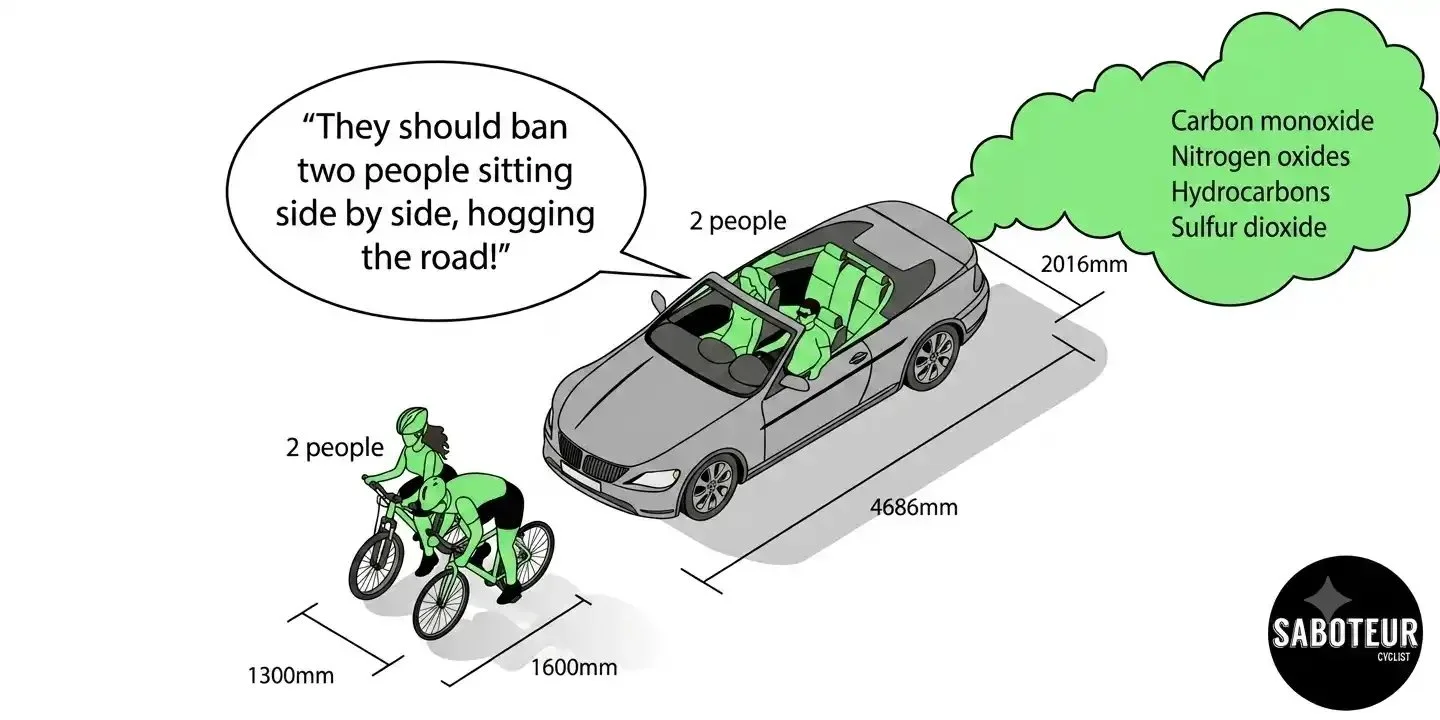
Motonormativity Explained: Live Q&A with Ian Walker & Marco te Brömmelstroet
What do we treat as “normal” without ever noticing? When it comes to cars, driving, and the design of our streets, the answer is: a great deal.
The Lab of Thought is launching a new event series — an Ask Me Anything — and we’re starting with a big one. Professor Ian Walker and Professor Marco te Brömmelstroet join us to unpack motonormativity: the shared, often unconscious bias that leads societies to judge motoring by a different standard than almost everything else. Expect a frank look at why car dominance feels so natural, why public support for change is consistently underestimated, and what it actually takes to rethink the streets we live with.
This isn’t a webinar. It’s an intimate, live conversation built for people who want to go deeper. You’ll submit your questions when you book and put them to Ian and Marco directly on the day. The session also opens the door to our new Lab of Thought community.
Wednesday 1 July · 5:30pm–6:30pm CEST · Online
👉 Tickets are limited and kept small on purpose — book before they’re gone.
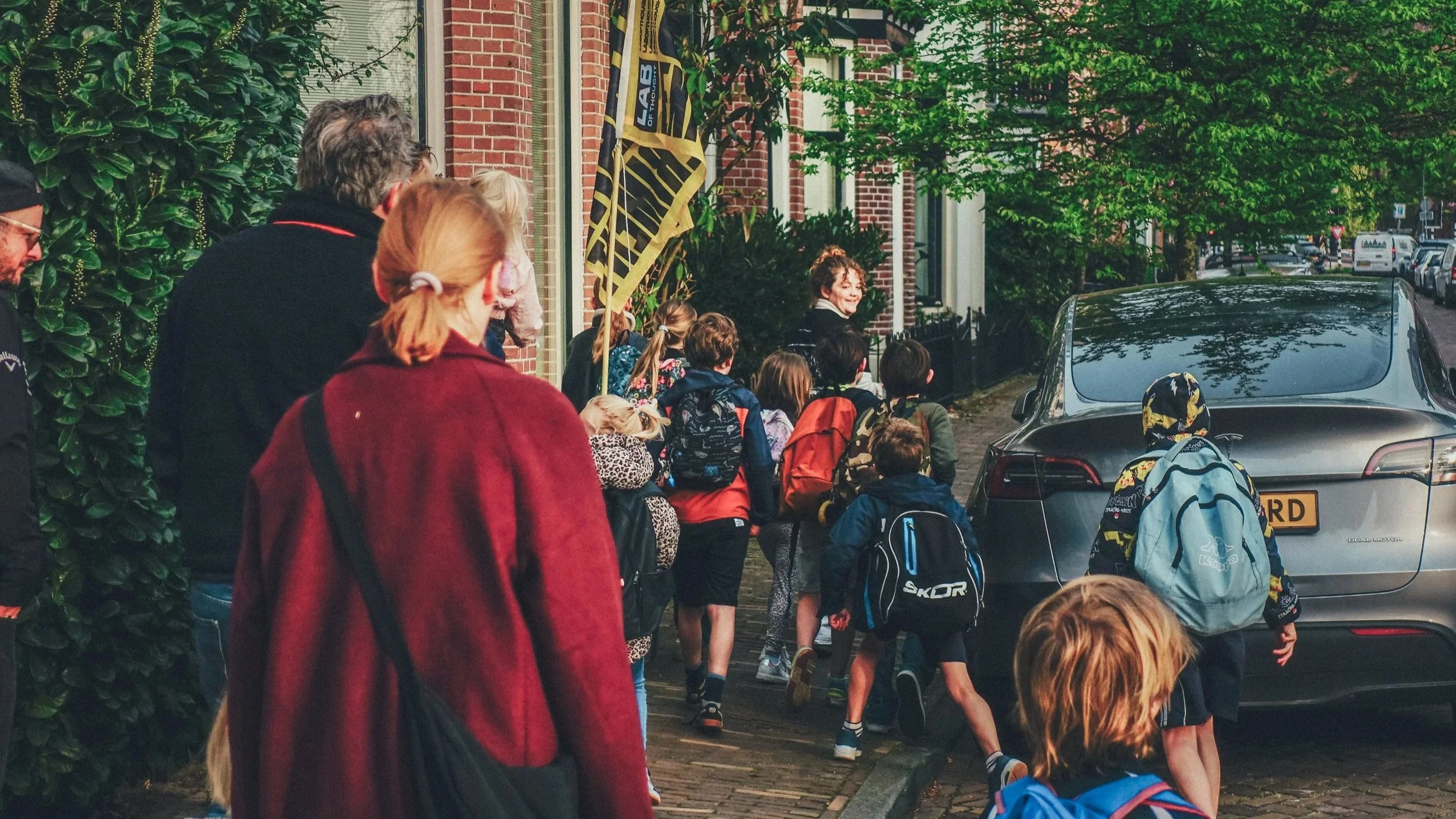
Student spotlight: Walking School Buses — giving children back their streets
Our streets were not designed with children in mind — and it shows. According to the UN Convention on the Rights of the Child, 8-year-olds should be able to move through their city independently. Most can't.
To understand why, we ran a walking school bus pilot in Haarlem: groups of children walking a fixed route to school, collected at "bus stops" by adult volunteers. Children shared their experiences through drawing and building workshops, while parents were surveyed separately — together painting a picture of what independence actually looks like from both sides.h.
The answer kept coming back to the same thing: infrastructure. Dangerous crossings, roads designed for cars, streets that simply weren't built for a child travelling alone.
The pilot wasn't just an experiment — it was a way to make the problem visible. Walking school buses show what's possible and surface what's in the way. They won't fix the street, but they can get communities unstuck: building awareness, showing potential, and making the case that children's independence isn't a nice-to-have — it's a right we've quietly designed away.
Student spotlight: Roadragers — when language lets drivers disappear
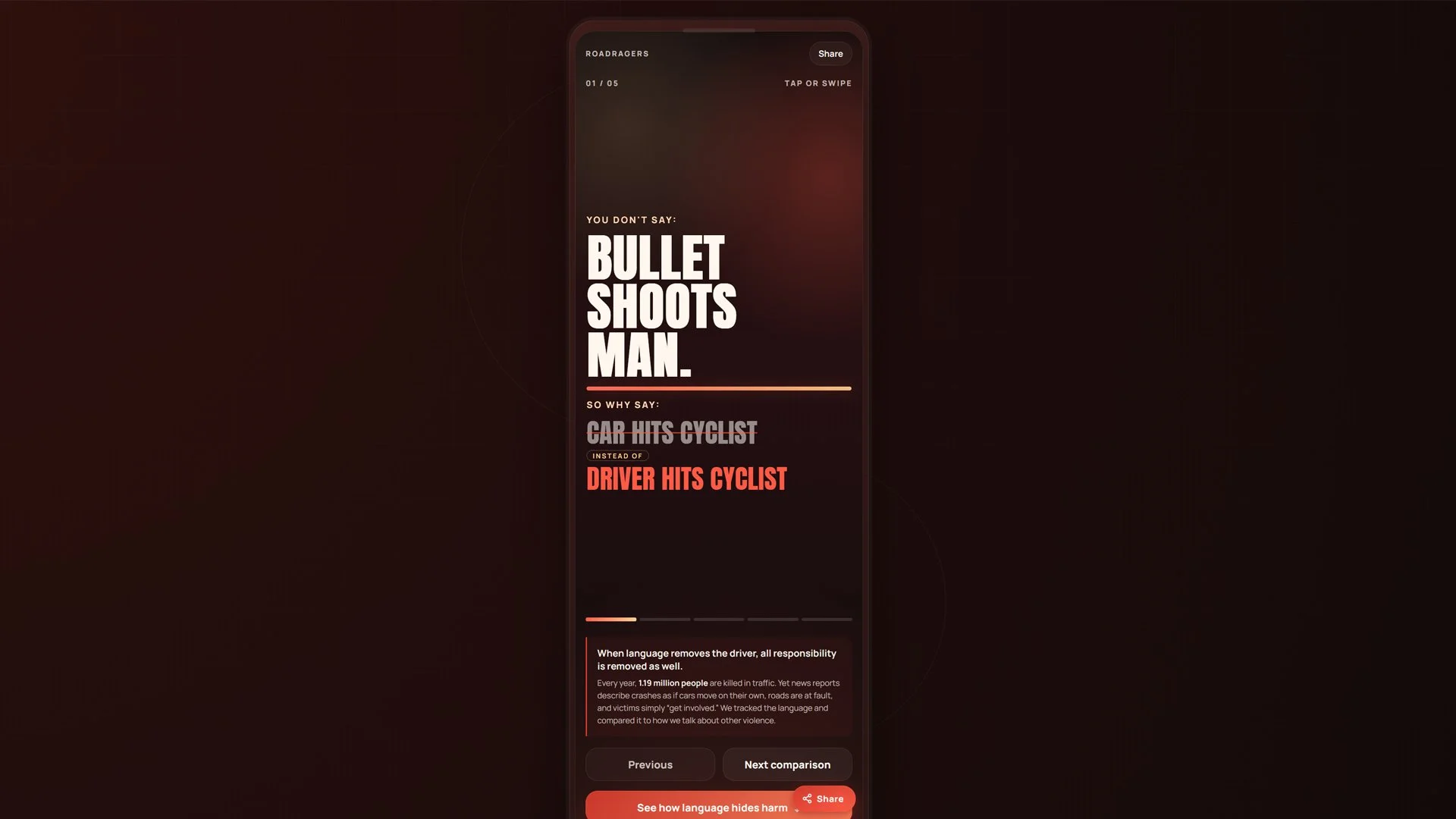
“Bullets don’t shoot people. So why do cars ‘kill’ cyclists?”
That’s the question behind Roadragers, a website built by first-year Computational Social Science students at the University of Amsterdam, working from our Road Danger field lab (roaddanger.org). Their goal: bring road danger to a wider audience by exposing how everyday language quietly shifts blame.
The project tracks how news headlines erase the driver — “pedestrian involved in accident,” “car hits cyclist” — until traffic violence reads like a system nobody is responsible for. Drawing on research and real reporting, the students show how the word “accident” makes a preventable thing feel inevitable, and how passive framing breaks a public health crisis into a string of isolated misfortunes. There’s even an interactive tool where you can rewrite a headline to put the driver back in the sentence.
It’s a clear, striking piece of work, and a great example of what happens when students take a research idea and make it land for the public.
👉 Take a look and try the headline rewrite yourself
Thanks for reading!
If you're not already subscribed, click here.