
The Hill of Hysteria: Why Every Car-Free City Policy Faces Public Resistance (and Then Acceptance)
By: Alexander Premm
“Businesses will go bankrupt.”, “It’s political suicide.”, “Everybody will be late.”
These are familiar claims policy champions face when cities implement car-reducing policies that put human experience first. When cities announce new design measures, such as bike lanes, pedestrian zones, or traffic-calming projects, public reaction often follows a predictable curve: the Hill of Hysteria. It starts with a surge of outrage that rises sharply until implementation day, then fades afterward. Long-term political consequences? Usually not the case. The path to better urban environments is almost always accompanied by resistance—typically in three phases, beginning with the rise.
1. The Rise: Why Car-Reducing Policies Trigger Public Resistance
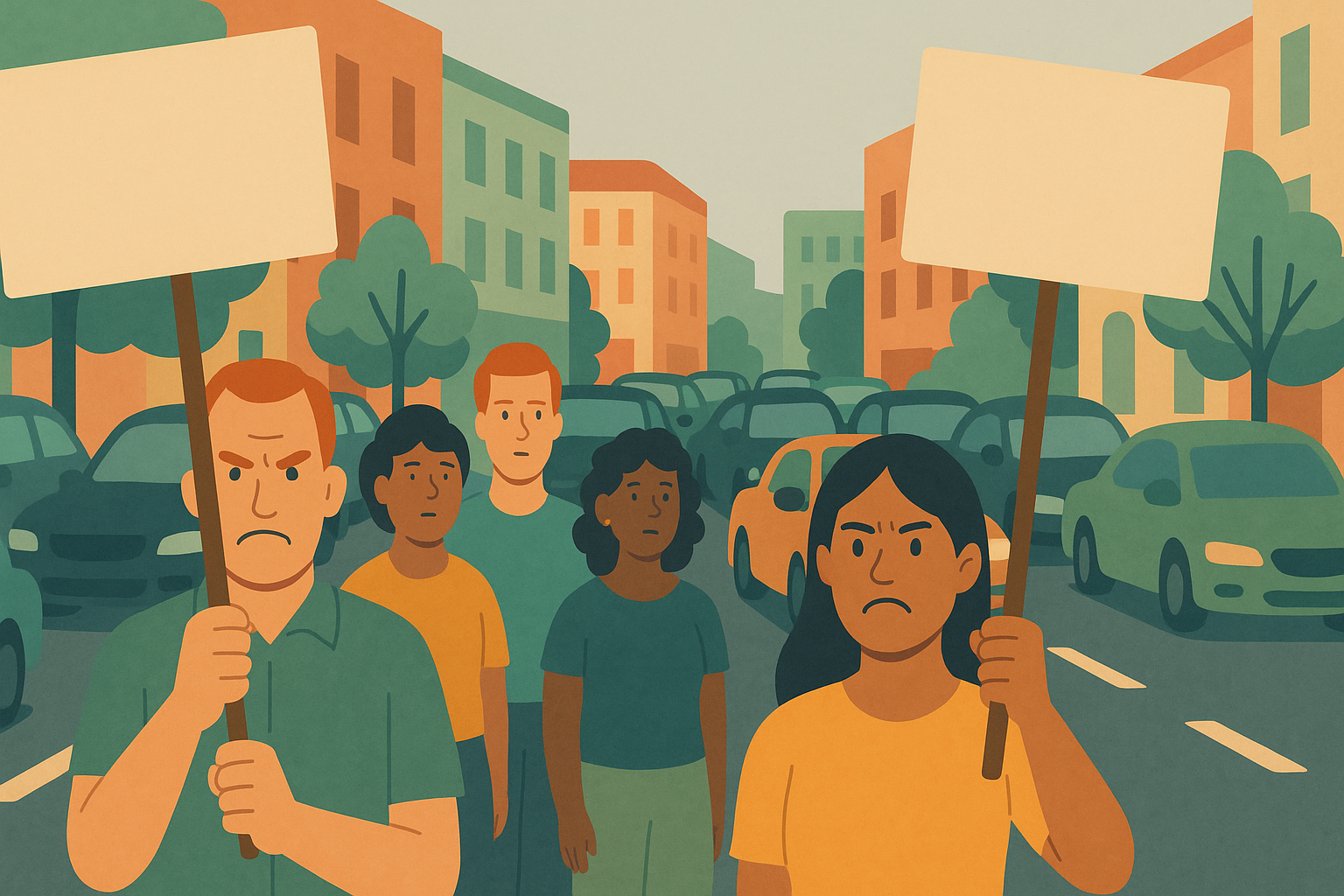
Policies that aim to reduce car dependence are almost always met with resistance. This opposition is often initiated by a small but vocal group of citizens defending the multi-generational narrative of car-centric planning. They start petitions, hold protests, and challenge the policy in court. These voices are amplified by headlines and social media algorithms, making the controversy appear enormous. The dominance of negative opinions creates a bias, called pluralistic ignorance, even though most people quietly support the changes: safer streets for children, cleaner air, and more livable neighborhoods. The spread of misinformation, often fueled by political opposition, combined with the natural human tendencies of change aversion and loss aversion, pushes the reaction upward to the next phase: the peak.
2. The Peak: Managing Backlash During Urban Mobility Change
The implementation of car-reducing policies triggers the peak of resistance. It’s game day for the mobility transition and its policy champions. There’s congestion from construction, the need for people to adjust their daily routines, and a general period of adaptation. Those policymakers who lead with strong values, especially when resistance looms large, and a clear vision of safer, human-friendly streets, tend to make it over the hill. What unites these policy champions is the trust they’ve built, the alliances they nurture, and the participation opportunities they create. Consistent communication about what’s gained, not just what’s given up, also plays a vital role.
Most importantly, their resilience allows citizens to experience the change first-hand—and those experiences often turn out far better than earlier headlines suggested.
3. The Descent: Citizens Embrace The Positive Externalities
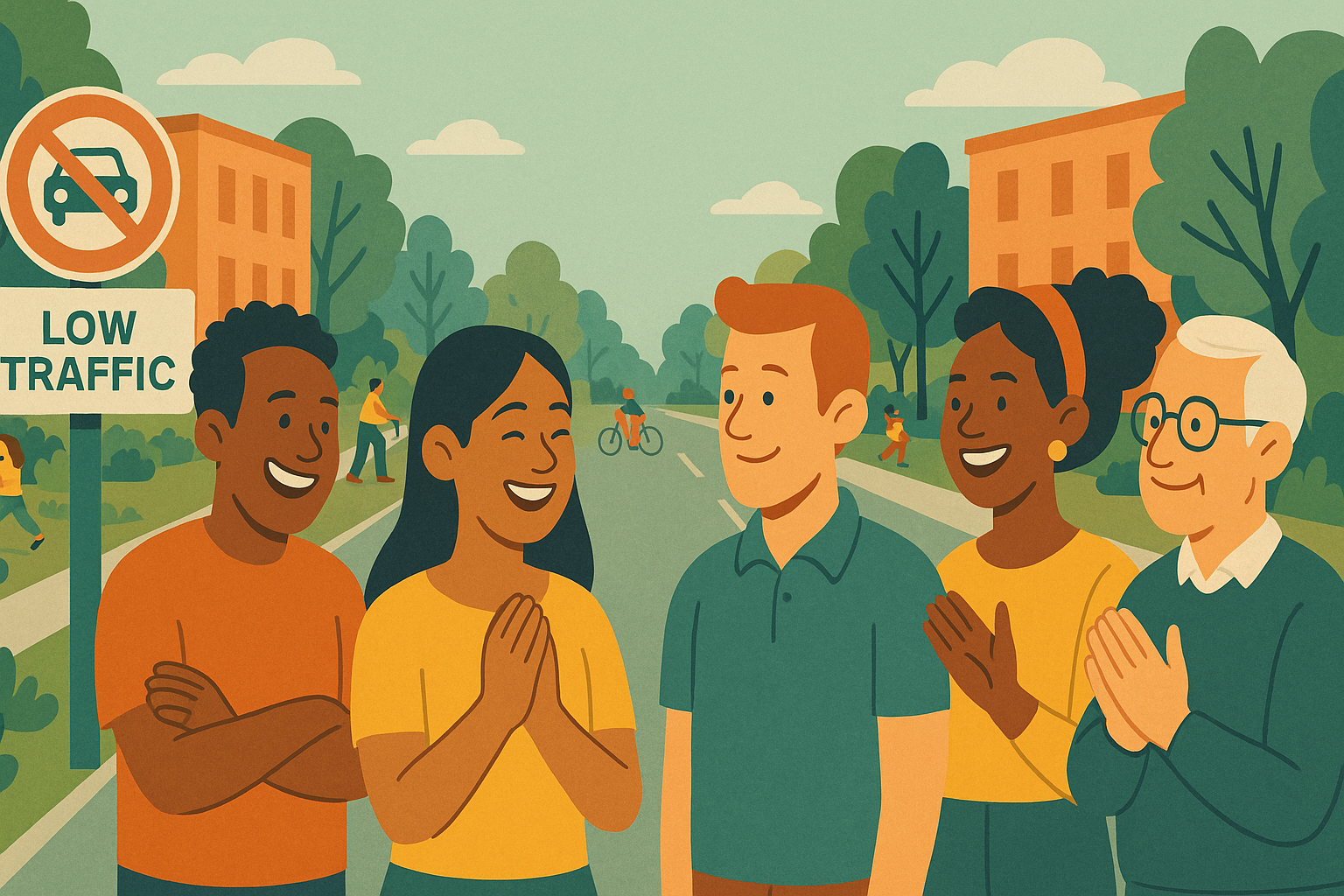
Once a car-reducing policy is implemented and people can experience the results themselves, resistance fades. The concerns—often fueled by misinformation—rarely materialize. Instead, the positive effects of calmer, safer, and more livable streets become visible to everyone. Soon, the majority begins to defend the new status quo. People realize: “It’s much nicer this way”, and they don’t want to go back. A small group of opponents might never be persuaded, but history shows that when leaders stand firm through resistance, voters usually stand with them. Resistance is part of every car-reducing policy. Amsterdam, Pontevedra and Paris also faced major resistance, which however, did not stop them from successfully reducing car dominance.
Lessons Learned
Resistance is temporary: Loud voices against the changes are part of the game, but do not represent the general attitude or indicate future acceptance
Speak up for the change you want to see. If you value safer, more livable public spaces and streets, make your voice heard—it helps counter the dominance of negative narratives.
Mind the language we use. When a street is reconfigured, is it closed to cars or opened to people? Words shape perception.
Remember: resistance is part of every transition. The majority ultimately favors the change. Don’t be afraid—what lies beyond the Hill of Hysteria is almost always worth the climb.
Image Sources: Dall-E (2025)