
READY, SET, GO TRAINING
Cities and regions everywhere are facing profound mobility transitions. To navigate these changes, governments, professionals and citizens need new ways of thinking about streets, movement and public space. This course introduces practical frameworks, real-world examples and experimental approaches that help identify opportunities for change and translate them into concrete action.
To deepen and broaden the work, an educational programme has been developed in collaboration with the University of Amsterdam.
The programme prepares municipal professionals for their role in the mobility transition. It offers participants new perspectives on mobility, highlights the value of experimentation, and enables them to apply these insights directly to their ongoing work and projects.
READY
The programme is led by Prof. Dr Marco te Brömmelstroet, Professor of Urban Mobility Futures at the University of Amsterdam and an internationally recognised thinker in the field of urban mobility. Under his guidance, participants embark on an in-depth learning journey that connects academic knowledge with real-world practice. With this approach, civil servants take the next step in building a future-proof, liveable, and just cities and regions.
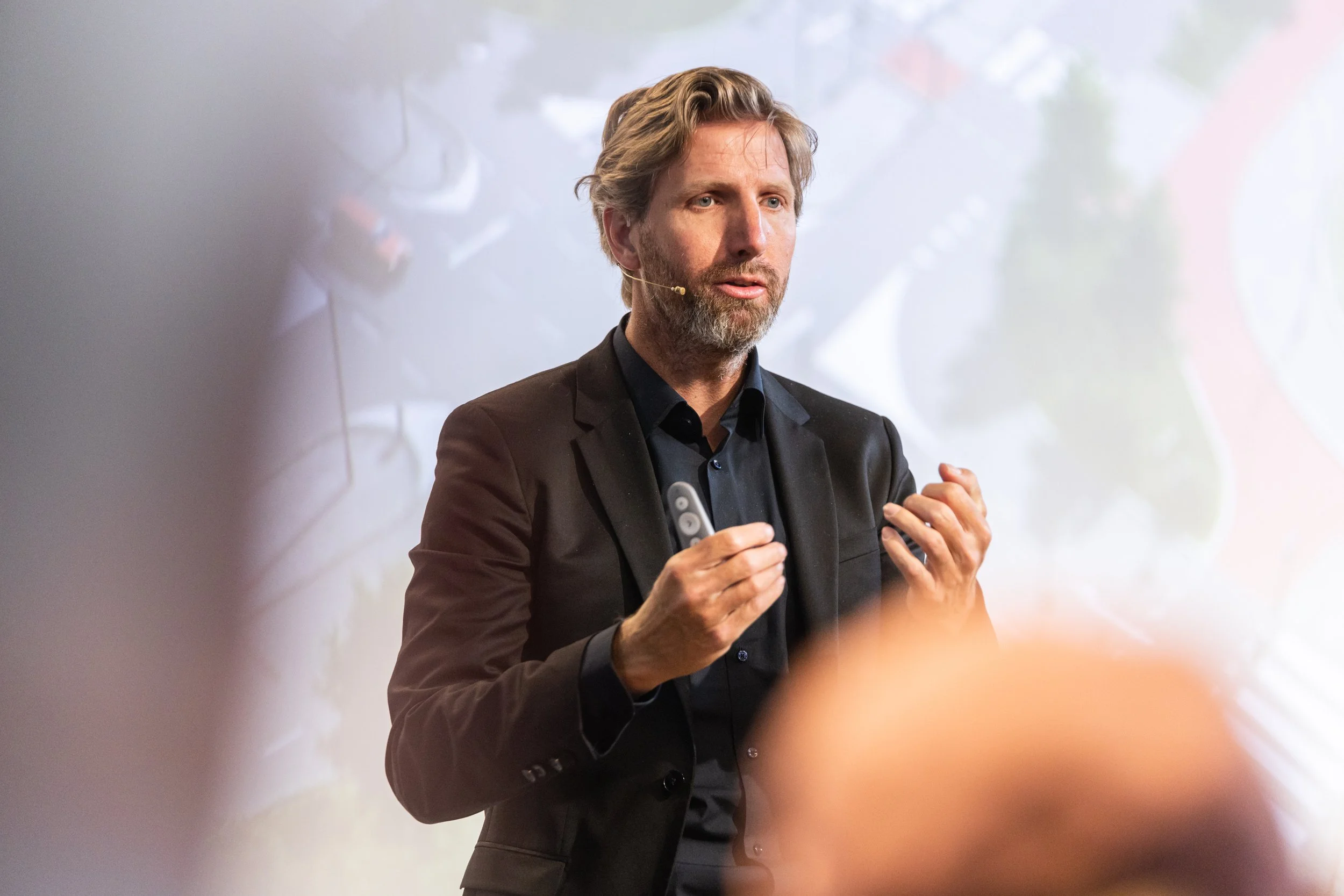
Prof. Dr. Marco te Brömmelstroet
University of Amsterdam
Program content
1 — Understanding Mobility Transitions
Since COVID-19, cities around the world have rapidly transformed their streets. While this momentum toward less car-dependent mobility is promising, one key question remains: will these changes last? In this module, we introduce the transitions framework to understand how mobility systems change across different levels of society. This framework will help you identify where your actions can have the greatest impact.
2 — Living World vs. System World
What happens when civic knowledge encounter a bureaucracy? We all know that implementing system-level change in large organizations is challenging—whether in government or other complex institutions. Yet behind every rule and procedure are real people, including the front-line staff who you work alongside every day. These professionals face the delicate task of balancing the demands of the system with the needs of the public, often finding creative ways to make a real difference within the constraints they operate under.
3 — Redefining Traffic in Cities
What is the role of traffic in our cities? While mobility (virtual and physical) is essential to accessing opportunity, is it possible to achieve mobility without traffic? We find that by moving people more efficiently, we are able to repurpose the reclaimed space for more valuable uses, even in the middle of a highway. As it turns out, changing the way we talk about traffic, especially moving away from utilitarian language, is a powerful way to change perceptions of traffic for yourself and others.
4 — Streets as Transition Experiments
Streets have become living laboratories for change. Across cities, individuals and communities are experimenting with new ways of organizing mobility and reclaiming public space. These initiatives — often spontaneous, playful, and temporary — show that transformation can start small yet ripple through institutions and reshape policy.
SET
5 — Streets as Placemaking and Movement
This module explores how COVID-19 opened new thinking about streets as places for both movement and social life. We look at the historical evolution of streets and how ideology shapes what people believe streets are for. The key question: can mobility and public space coexist in ways that make cities more liveable?
6 — Getting to Know Street Experiments
Around the world, cities are experimenting with new uses of streets. These experiments range from simple street markings and parklets to partial street closures and car-free streets. Together they show how tactical urbanism and bottom-up initiatives can spark healthier, more people-focused streets.
7 — Implementing Street Experiments
How do street experiments actually happen? This module explores the process from idea to implementation. Temporary interventions allow people to experience change directly, turning abstract plans into lived reality. You will learn how tactical urbanism can address strategic problems and how design and visibility help experiments gain public support.
8 — Evaluating Street Experiments
What role should traffic play in our cities? By examining examples from cities around the world, we explore how moving people more efficiently can free up valuable public space. We also look at how the language we use to talk about traffic shapes how people think about mobility and urban life.
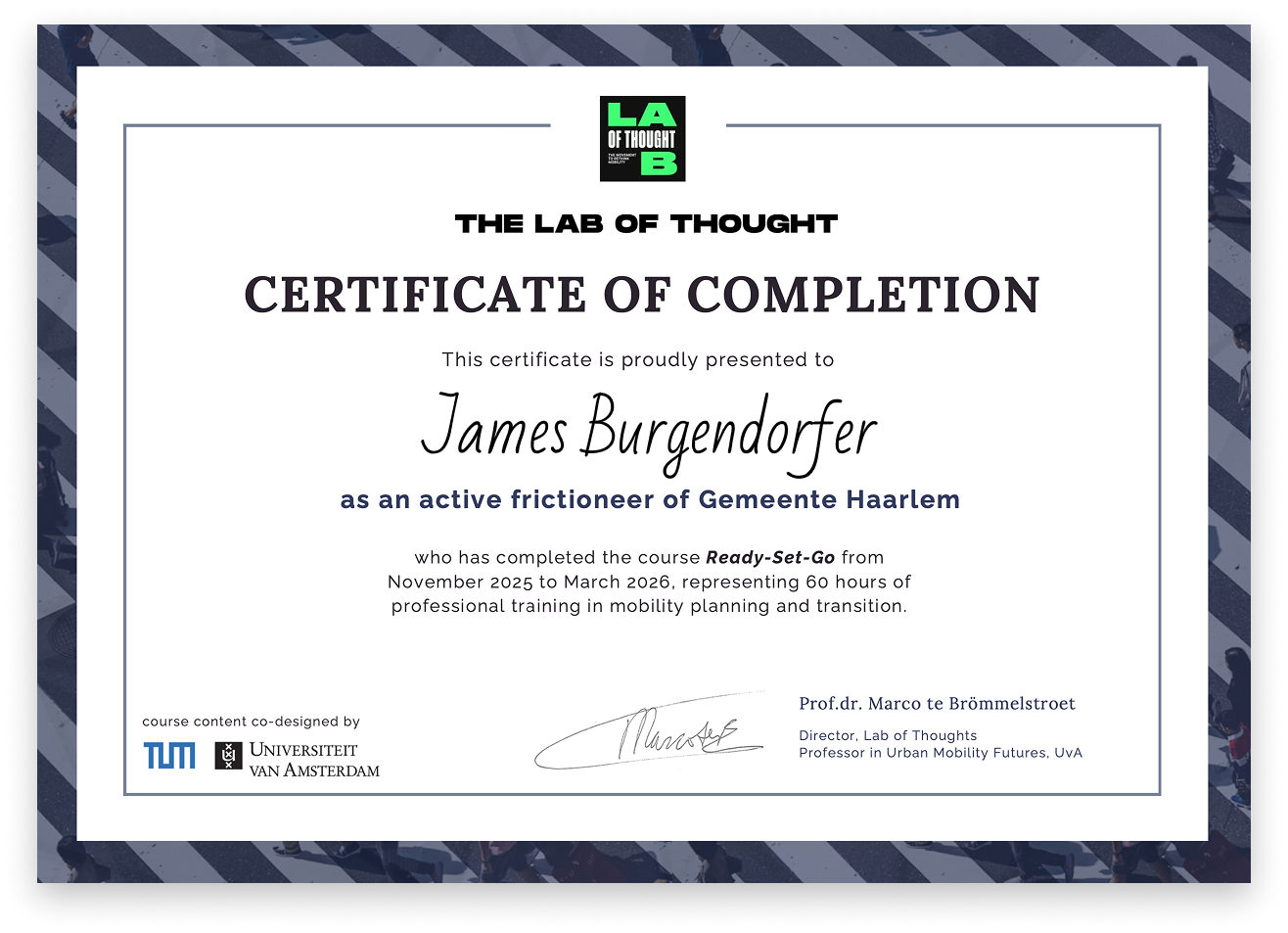
You receive a certificate after completing the course.
GO
9 — Assignment: Designing and Executing a Transformative Urban ExperimentIn this assignment, you will select an active project from your work or study and identify an opportunity to design a radical yet feasible urban experiment that challenges conventional approaches to mobility and public space.
During a collaborative session, we will define the experiment’s scope, objectives, and potential impact. You will then present your concept to the group and implement it in a real-world setting.
The goal is to contribute to a growing practice of urban experimentation, share your insights with a wider community, and help rethink the future of our streets and shared spaces.